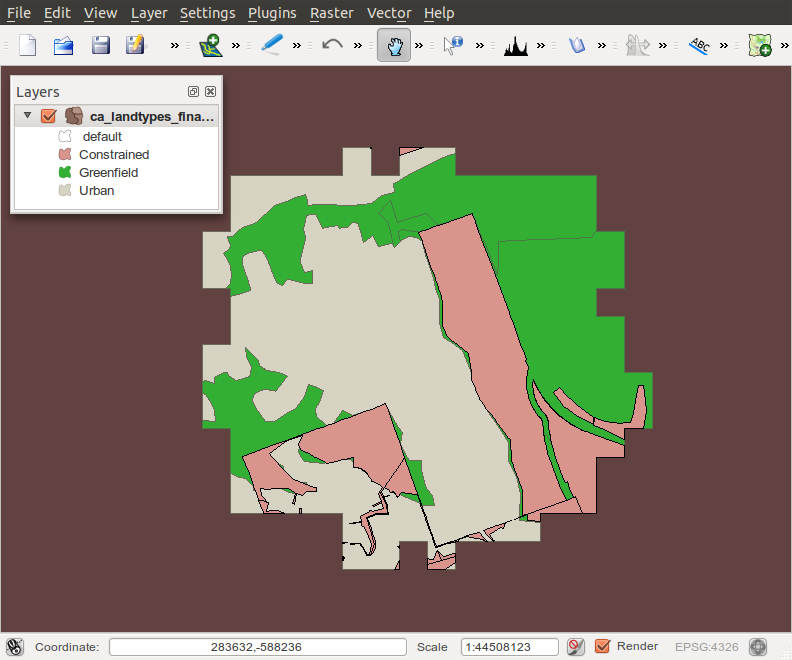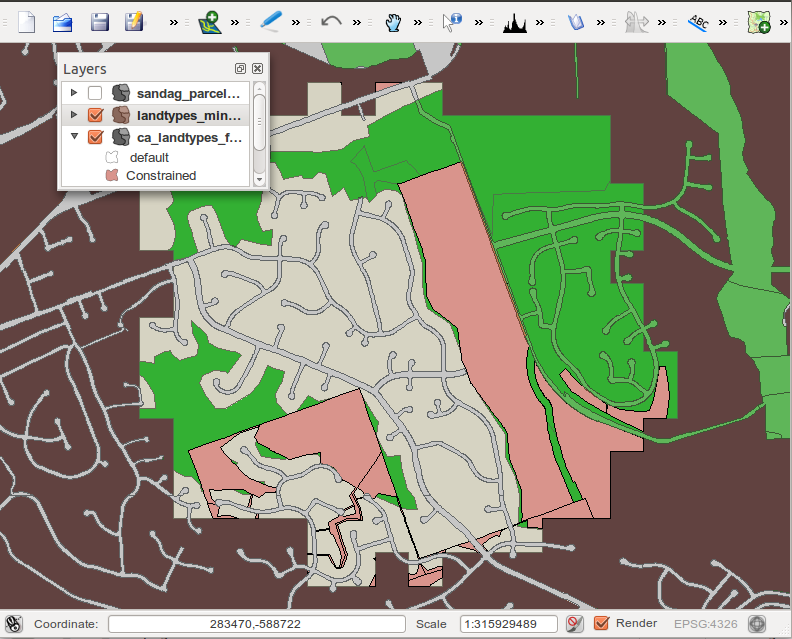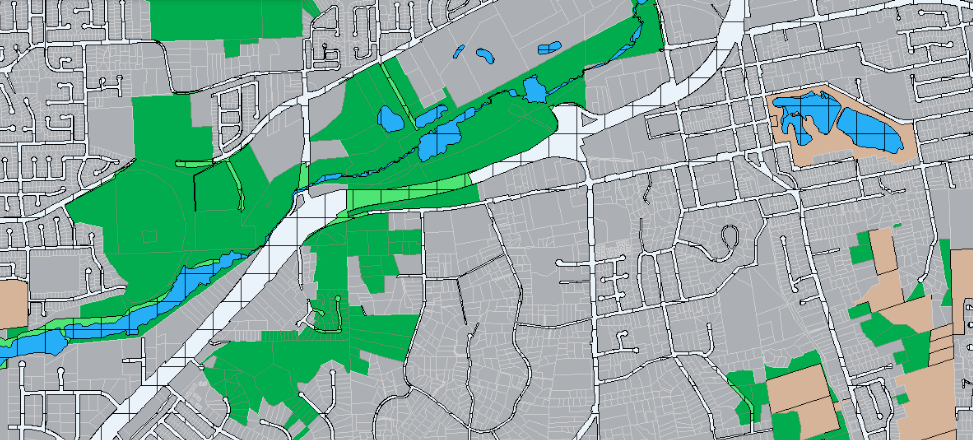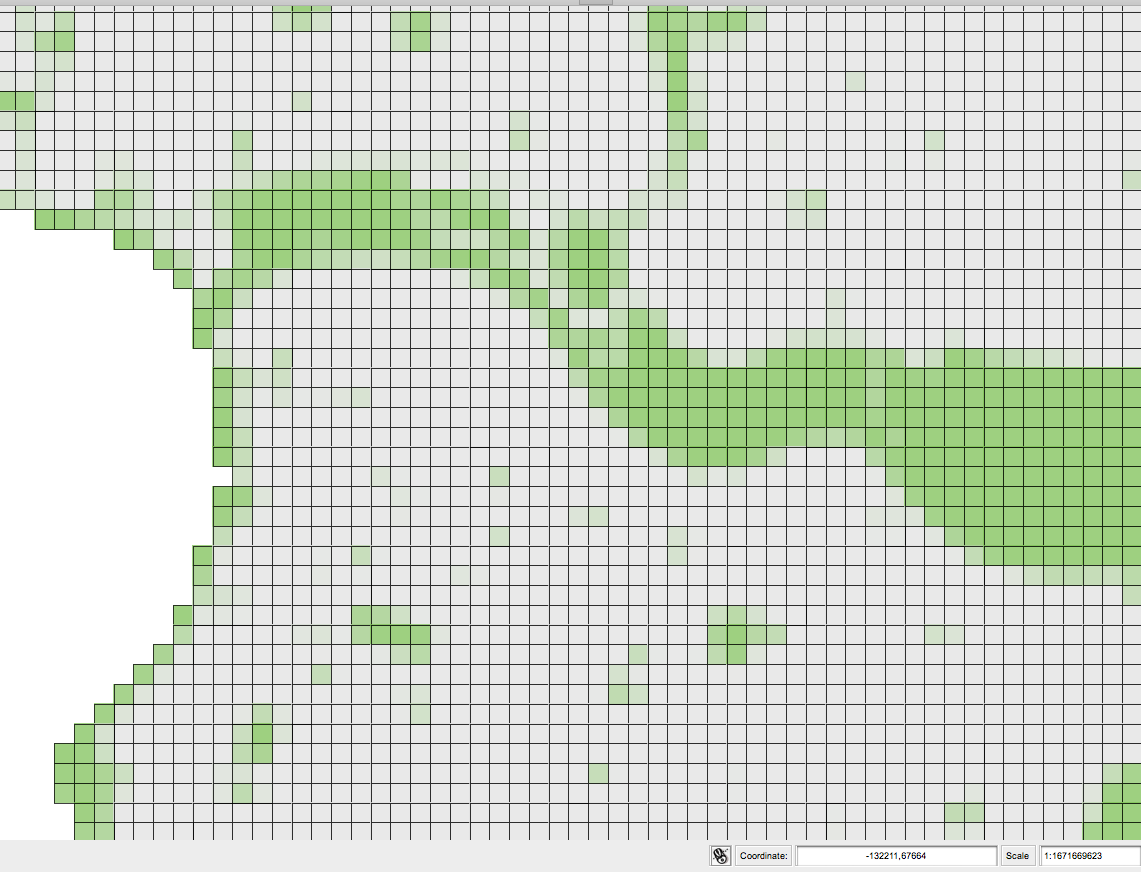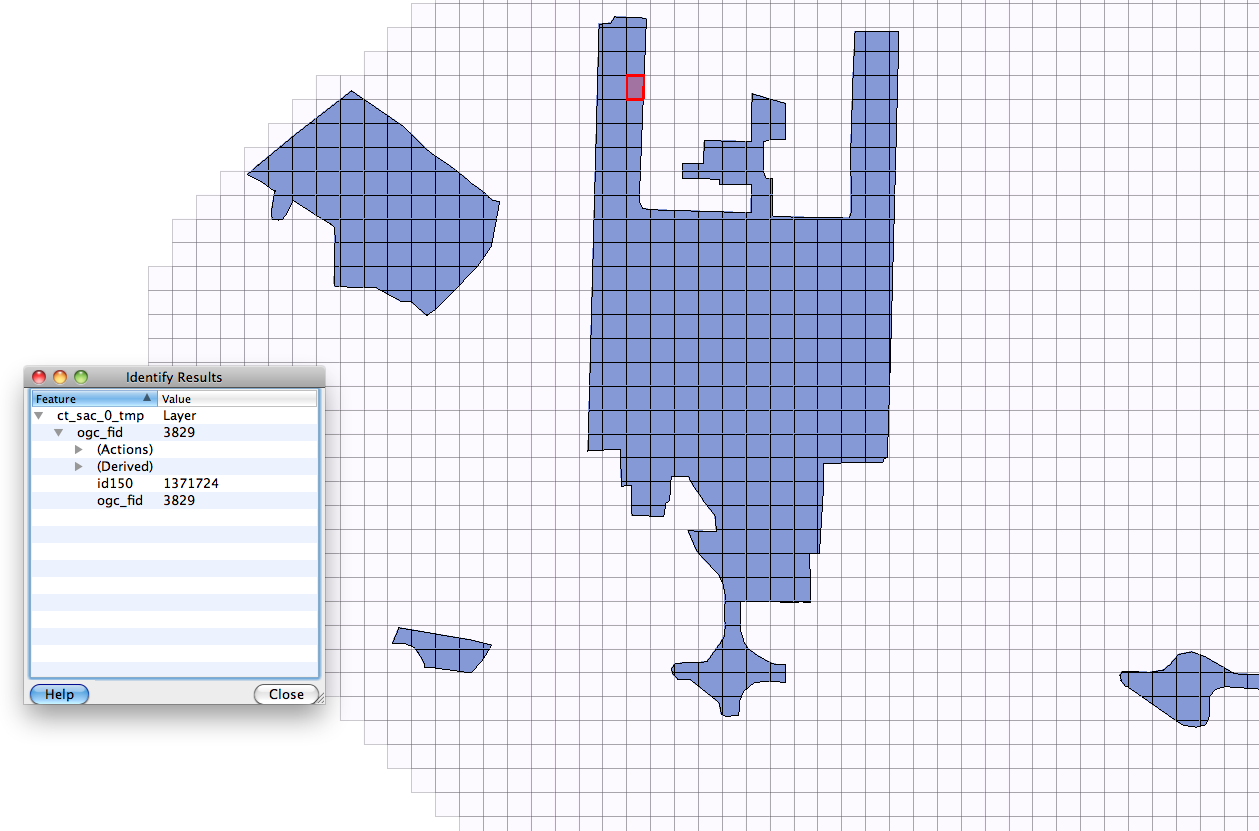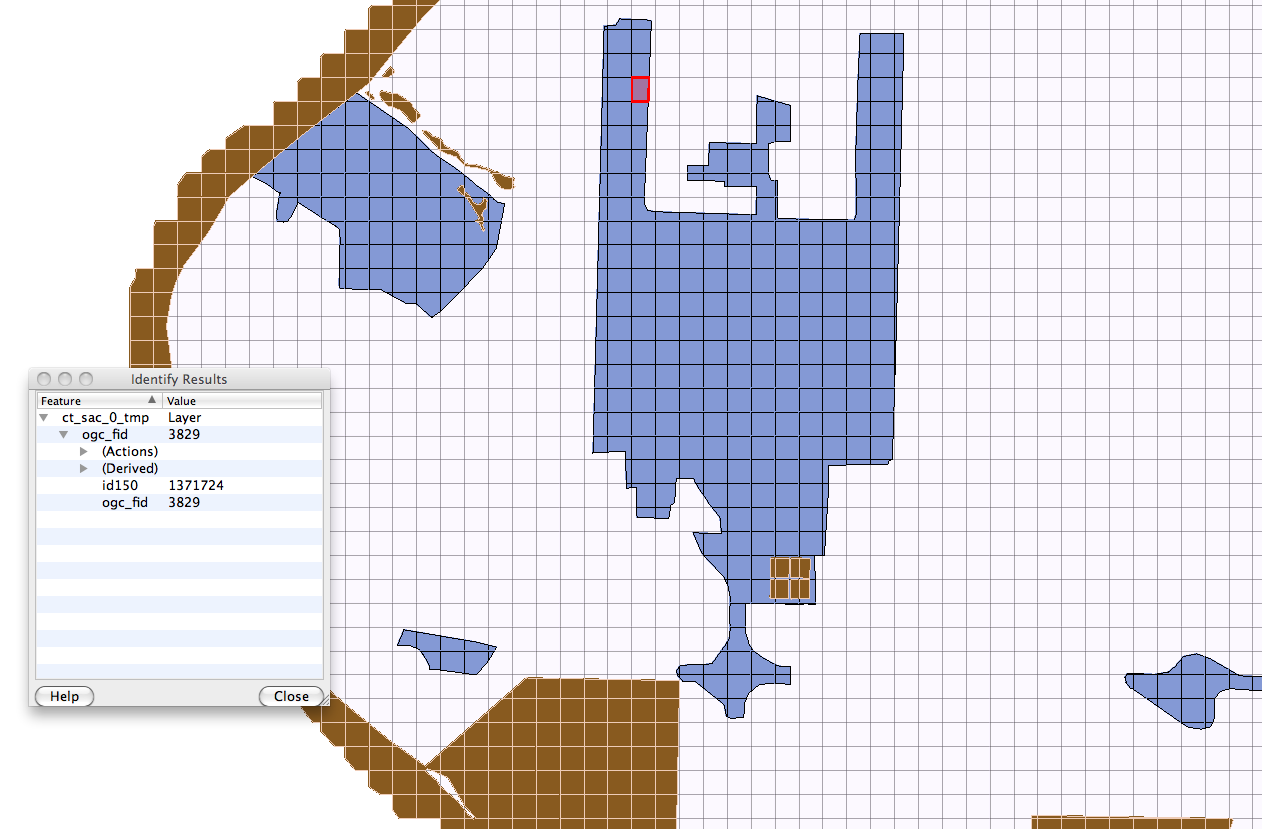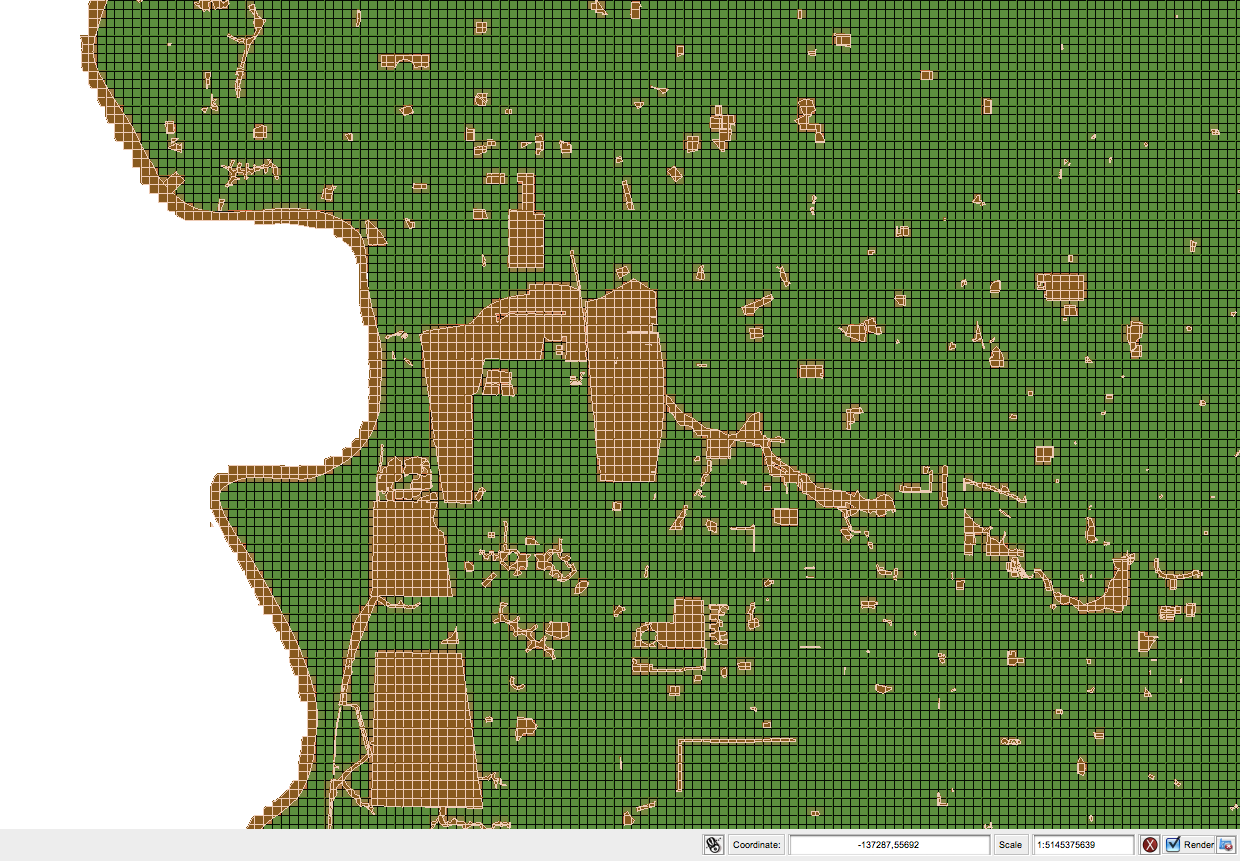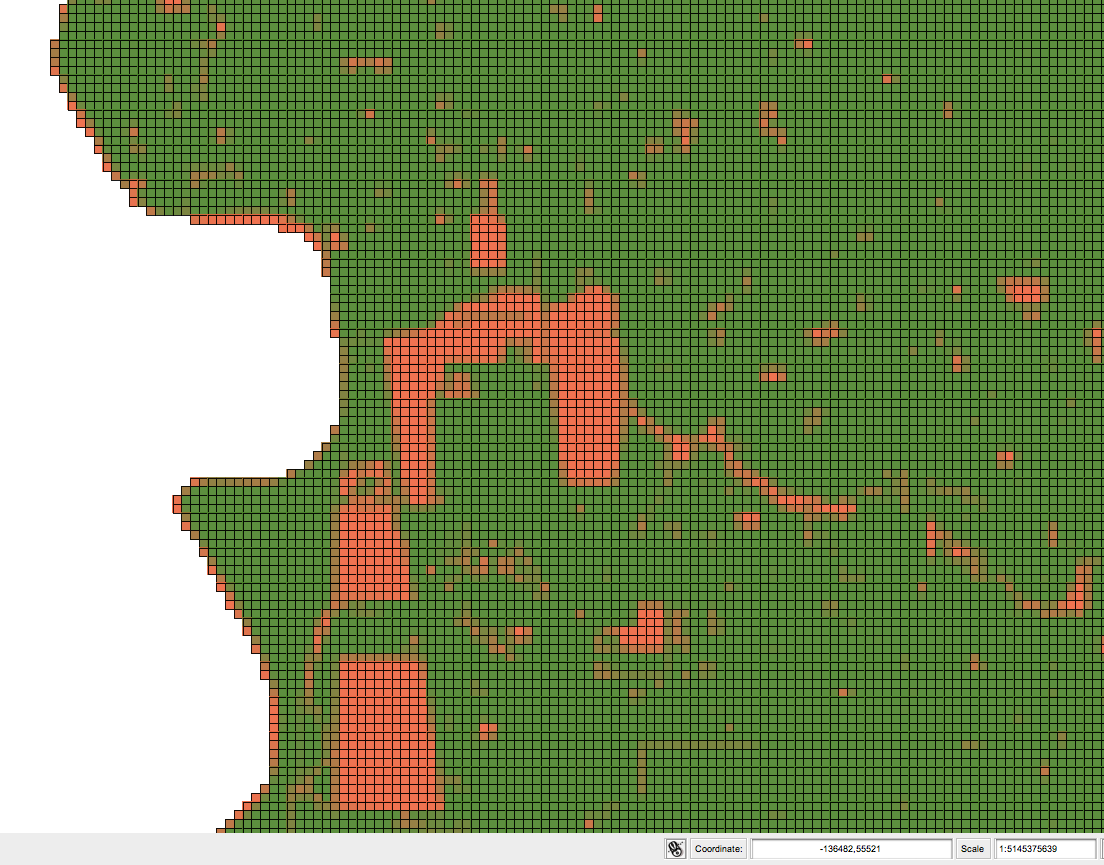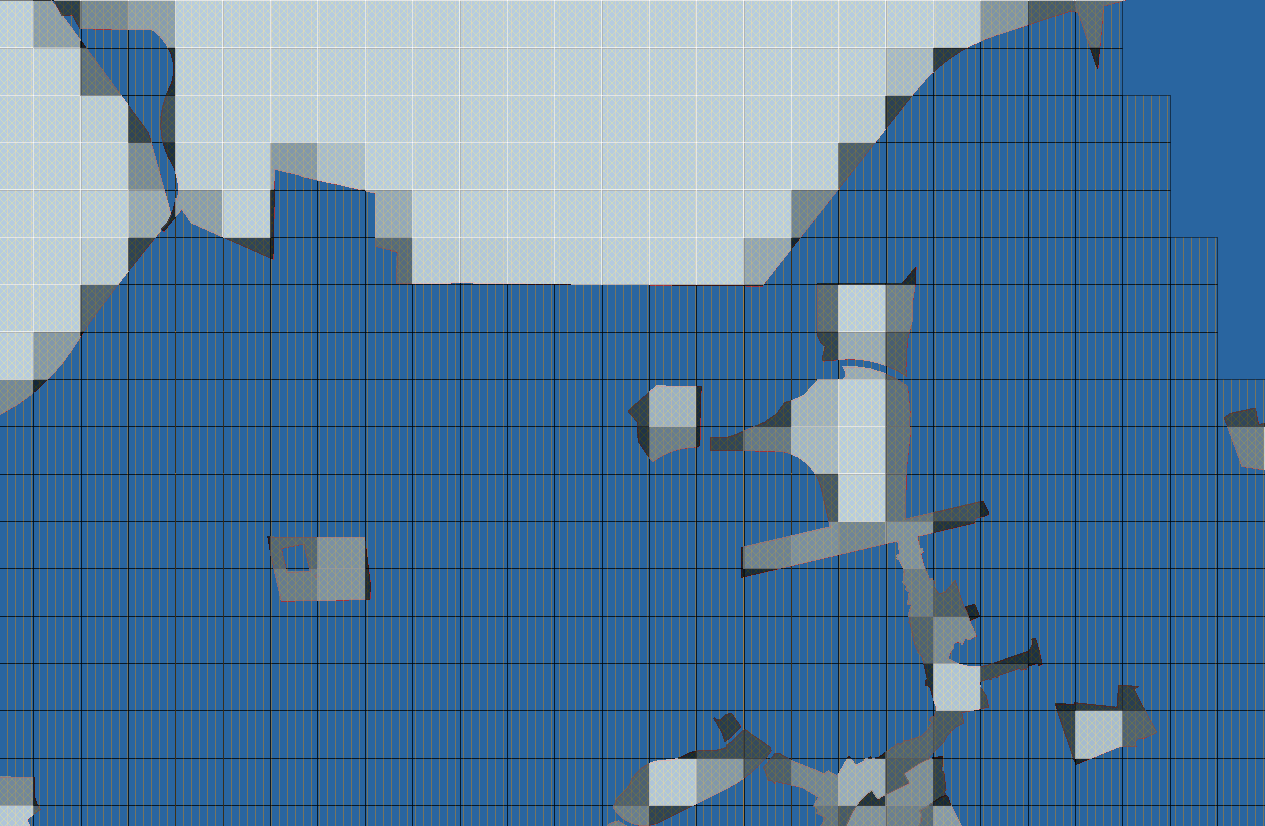
Given a set of classified polygons, in this example classified into three categories by name, apply a reference grid, and sum the areas for each classification into float fields in a destination table. This code contains test harness pieces in it also, so that a smaller example can be executed and verified, before applying the process to large sets.
drop table if exists ca_lt1 cascade; --test_geom_out;
create table ca_lt1 --test_geom_out
as    select
  g.gridcode,
  g.the_geom,
  SUM(d.acres_urban) as acres_urban,
  SUM(d2.acres_constrained) as acres_constrained,
  SUM(d3.acres_greenfield) as acres_greenfield
FROM
  grid150m_uniq g
  --test_grid g
LEFT JOIN
( select
     sum(st_area( st_intersection( land.wkb_geometry, g2.the_geom))) as acres_urban,
     g2.gridcode
  from
     grid150m_uniq g2, --test_geom land
     ca_landtypes_df land
   where st_intersects( land.wkb_geometry, g2.the_geom) AND
     land.landtype = 'Urban'
     AND st_intersects( st_geomfromEWKT('SRID=3310;POLYGON((-147472.090  71129.874, -113634.730  71129.874,   -113634.730  50253.940,   -147472.090 50253.940,  -147472.090 71129.874))'), g2.the_geom)
  group by g2.gridcode
   ) d
ON ( g.gridcode = d.gridcode )

LEFT JOIN
( select
     sum(st_area( st_intersection( land.wkb_geometry, g2.the_geom))) as acres_constrained,
     g2.gridcode
  from
     grid150m_uniq g2, --test_geom land
     ca_landtypes_df land
   where st_intersects( land.wkb_geometry, g2.the_geom) AND
     land.landtype = 'Constrained'
     AND st_intersects( st_geomfromEWKT('SRID=3310;POLYGON((-147472.090  71129.874, -113634.730  71129.874,   -113634.730  50253.940,   -147472.090 50253.940,  -147472.090 71129.874))'), g2.the_geom)
  group by g2.gridcode
   ) d2
ON ( g.gridcode = d2.gridcode )

LEFT JOIN
( select
     sum(st_area( st_intersection( land.wkb_geometry, g2.the_geom))) as acres_greenfield,
     g2.gridcode
  from
     grid150m_uniq g2, --test_geom land
     ca_landtypes_df land
   where st_intersects( land.wkb_geometry, g2.the_geom) AND
     land.landtype = 'Greenfield'
     AND st_intersects( st_geomfromEWKT('SRID=3310;POLYGON((-147472.090  71129.874, -113634.730  71129.874,   -113634.730  50253.940,   -147472.090 50253.940,  -147472.090 71129.874))'), g2.the_geom)
  group by g2.gridcode
   ) d3
ON ( g.gridcode = d3.gridcode )

  WHERE st_intersects( st_geomfromtext('SRID=3310;POLYGON((-147472.090  71129.874, -113634.730  71129.874,   -113634.730  50253.940,   -147472.090 50253.940,  -147472.090 71129.874))'), g.the_geom)

GROUP BY
  g.gridcode,
  g.the_geom;